Pecola and the MacTeer sisters
The Bluest EyePecola and the MacTeer sisters share a brief but important childhood relationship in which a temporary household placement becomes a form of companionship and care. Claudia and Frieda welcome Pecola into their home, include her in their private world, and respond to her with awe and protectiveness; their bond also reveals the limits of childhood solidarity against the racialized judgments and adult violence surrounding her.
The County Placement and a New Companion
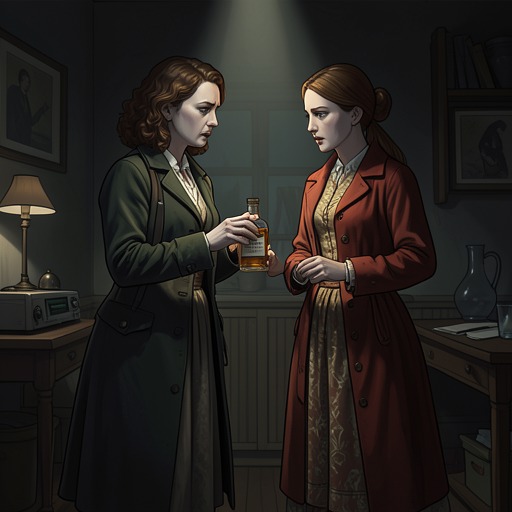
Two days before Pecola arrived, the MacTeer sisters’ mother told them that a girl with nowhere to go would be placed in their home. The county had arranged the stay for a few days while it decided what to do with Pecola. She arrived accompanied by a white woman and with no change of clothes or nightgown, a spare, concrete sign of how little security her situation afforded.
The sisters’ response made the placement more than a matter of lodging. During Pecola’s few days with them, Claudia and Frieda stopped fighting each other and turned their attention to their guest, trying to keep her from harm. The temporary household arrangement gave the three girls time together, while the sisters’ welcome offered Pecola a measure of inclusion she could not take for granted elsewhere.
Shared Childhood and Protective Care
The girls’ closeness appears in the way they share domestic space and routines. At night, the three lie still together, and Claudia and Frieda regard Pecola with awe and respect. Their feeling that being beside her is almost sacred marks a child’s earnest attempt to understand and honor a guest whom they see as different from themselves. The moment is intimate without erasing the unequal circumstances that brought Pecola into their home.
That protective impulse becomes active when Pecola is targeted by other children. As she moves around the circle crying, with her notebook dropped and her hands covering her eyes, Frieda throws off the coat over her head, runs toward the group, and brings her books down on Woodrow Cain’s head. The circle breaks. Frieda’s intervention is a direct defense of Pecola, but the scene also shows the sisters’ vulnerability: before Frieda acts, she and Claudia fear the children may turn their attention toward them too.
Vulnerability and the Limits of Shelter
The sisters witness signs of Pecola’s distress that they cannot readily explain. When she suddenly bolts upright, wide-eyed with terror, and makes a whinnying sound, the episode unsettles the girls. Their companionship gives her witnesses and nearby companions, but not the power to make the causes of her fear disappear.
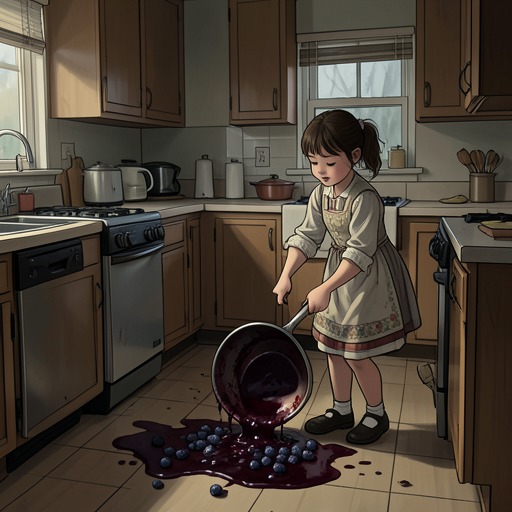
The contrast between the welcome she receives at the MacTeers’ and her treatment elsewhere is stark. At the Breedlove home, Mrs. Breedlove enters carrying a tightly packed laundry bag and knocks Pecola to the floor over the spilled pie juice. The sisters’ household has offered a temporary haven; it cannot undo the violence Pecola faces after leaving it. Her stay is defined by this limit as much as by the affection and attention she receives there.
The World Beyond the Friendship
The girls’ relationship takes shape within a wider culture that teaches children to value whiteness. Claudia recalls that adults, older girls, shops, magazines, newspapers, and window signs all endorsed the blue-eyed, yellow-haired, pink-skinned doll as the object every girl was supposed to treasure. That surrounding standard helps explain why care between the girls matters, while also locating their childhood within a world that assigns value through racialized appearance.
Pecola’s isolation becomes more visible as other children mock her, and the novel later shows how the sisters’ early closeness differs from the social abandonment that surrounds her. Claudia’s retrospective narration recognizes that the girls had defended themselves against others for as long as they could remember, treating speech as something to decode and gestures as something to scrutinize. Their friendship is thus neither an escape from the community’s cruelty nor a simple solution to it: it is a small, real practice of welcome and defense within a hostile social world.
Significance of the Bond
The relationship is brief in its shared domestic form, but it establishes a contrast between being received as a companion and being treated as a target. The MacTeer sisters do not control the county’s decision about Pecola’s future, and their protection cannot prevent the harms she encounters in other households or among children. What they can offer is attention, shared time, and, in Frieda’s intervention, a refusal to leave Pecola entirely undefended.
This early bond also sharpens the novel’s account of childhood: children can recognize distress and act in solidarity, yet they live inside social rules and adult circumstances they cannot command. The sisters’ welcome matters precisely because it is limited. It gives Pecola a brief experience of belonging without pretending that companionship alone can repair the conditions that leave her exposed.